
India's Payment Infra
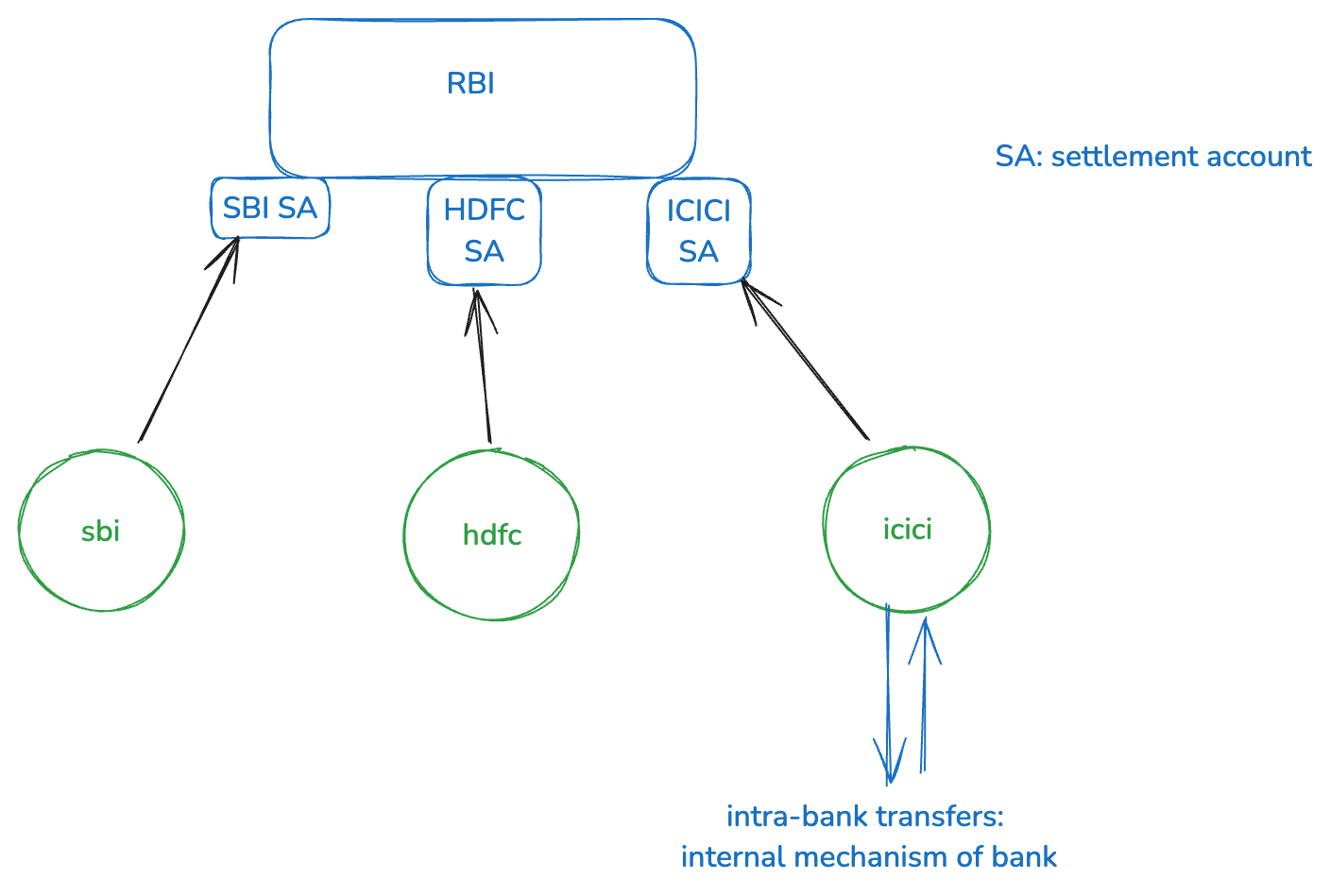
- intra bank payments are easy-peasy, just update some numbers within
the bank's systems.
- for inter-bank payments, the settlement layer is provided by RBI.
Each bank has a settlement account with the RBI (the bank of
banks)
- RBI provides RTGS, which does large transfers immediately (i.e. the
interbank settlement done) and irrevocably. The fees is consequently
high due to this guarantee.
- RBI also provides NEFT, wherein the settlement happens in periodic
batches (so it might take a few hours before the transfer is
executed).
- NPCI (national payments corporation of india) is a NPO started by
RBI to research on payment infra. They came up with IMPS.
- IMPS has a interbank messaging layer, which allows the recipient's
account to immediately reflect the credit. In the background though, RBI
will do the IMPS settlements in batches (similar, but more frequent than
NEFT). NPCI provides the messaging infra (central switching and message
routing system).
- UPI is similar to IMPS, in that it uses messaging layer + RBI's settlement layer. But it has a different architecture. The messaging layer for example is mobile-first and API-based architecture, allowing a more comprehensive network of apps/fintech/banks/vendors etc. to participate in the payment network. Also, they have more friendly UX (QR code, upi id, phone number) for a smartphone heavy country.
Other countries which have slower real-time payment systems, typically don't have fast protocols like UPI or IMPS. There can be multiple reasons for that including - The RBI-equivalent body there didn't push for these innovations + regulatory approach, difficulties in standardising due to factors like different technical capabilities.
It was interesting to see the local payment infra. There are many missing things from here - international transfers (SWIFT etc.), debit/credit cards, and the new boom in stablecoins.